Episodes / Owner Mindset / No. 638
Building Your Individual Empire: The New Entrepreneurial Shift
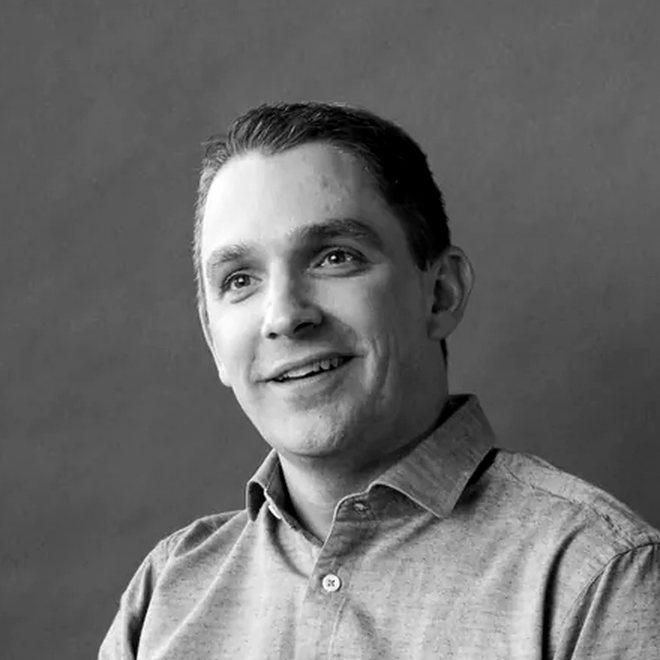
Ryan Deiss and Roland Frasier explore the evolving landscape of personal branding and entrepreneurship, focusing on the concept of the 'Individual Empire.' They discuss the shift from being…

In this episode
The write up
For years, we've told people to build a personal brand, and for years, I have followed that advice myself. So in this episode I wanted to ask Ryan Deiss what's next. More and more people are quietly trying to turn themselves into actual operating companies with revenue and teams and systems and, in some cases, value that can actually be transferred. So is this the most empowering shift in entrepreneurship, or is it just a new way for them to accidentally create a very expensive job?
I think where we landed is that the individual empire is a launchpad and that the business has to be built to stand apart from the person. As Ryan said, the person is the goose and the brands that they spin off are the eggs, and the eggs are acquirable and the goose probably isn't. My view was that it's definitely got to be systems first. The first thing you've got to fix is founder dependency.
A personal brand is really media
I started with the definitions. I think a personal brand is an audience that you're able to talk to that trusts you, and a personal empire is how you monetize that trust and fame. So I said this has been done at the top for years. Kylie and her makeup, Fenty, Kim Kardashian. What's different now is that it's trickling down to these influencers who are broke, because most of them are, and they're saying, can I do that? Can I build an empire from what I've got?
Ryan Deiss sharpened that. He's been drawing a distinction for a long time between media and brands. Media is where you aggregate the attention, and brands are what pays to get that or partners with it to do that. Ryan said most of these personal brands are actually media, and media on its own has been one of the poorest performing business models over the past couple of decades. So if you're going to monetize that, the best way is through brands that you own and operate. The rub, and Ryan said this in our conversation, is that it is a fundamentally different business model, and most of these people know the media business and not the brand business.
Then Ryan said, let's go up this ladder a little bit. The first rung on the ladder is ad revenue. That's the classic media model. And I said, you've got the YouTubers all saying the same thing, which is, we can have a billion views and make $8. So they're leaning on sponsored content. Then he said above that is brand partnership, which is a joint venture that eventually gets to equity, and he pointed to Ryan Reynolds and the Rock for that. Above that, he said, is launching your own brands. And he told a story from the other side of that table. He said, we were paying a newsletter affiliate 50 percent commissions. We ultimately went back and looked at the ad rates that they were charging. They were dramatically less than that. So we just closed the affiliate program and went out and bought ads instead. And you know what? They never noticed. So know your value before you go into a negotiation.
Where it caps out
Then I asked Ryan, when does the personal brand stop being an asset and become a bottleneck? His answer was that one person has 24 hours in a day. You run out of steam. You run out of ideas. It's like the same band can tour on the same hits. But if you're out there on social channels, you have to sing a new song every day.
My read is that it's kind of like the unicorn thing, where you've got Mr. Beast and Kylie and those guys, but the average bear, I think, caps out somewhere in the million to 5 million range. And at 45, 50 percent margin, that is a lot of money. I think there are a lot of people in that three, four, five, $600,000 a year range doing it themselves, and that's really where the bottleneck is.
His advice to that person was, look, media can birth brands. And also, by the way, media can birth other media. He used Native Commerce as the proof of that. A survival and preparedness channel, Survival Life, launched a homesteading business. Then the homesteading audience launched a makeup tutorial site. So his prescription was basically to get on the production side. The musician who starts a label. Find the person who's coming up with 50, 60, 70,000 subscribers and has that thing, partner early, and then build systems around being able to spot the next one. He named Barstool Sports as a company that has done that. And he was very honest about the downside too. He said, look, you're going to build some people up and then they're going to spin off when their contracts are done.
The team is the hardest part
I asked Ryan, what are some of the things that people massively underestimate? Ryan Deiss said the first one would be the audience itself. People confuse views with audience. A viral short is a lot of people who don't know you and only saw you once. He said Roy H. Williams, the Wizard of Ads, has preached for decades that it takes between 13 and 15 weeks for a radio campaign to bury a message in somebody's brain.
I think it's all hard. I just said the whole thing is hard. The team is the big one. You cap out so fast if it's just you. And everybody and their brother is selling you the picks and shovels to dig your gold mine. Most of them are defective. They fill up after one or two clients. The new client gets the good service. Many have a limited playbook. They run through that and then they're kind of done. I think content is the easiest thing right now. If you're good at what you do and you have the ability to use AI to iterate on what's working, then it's not as hard. The back end is still the work. We've got a team for YouTube, a team for X and LinkedIn, a team for Insta and Facebook, and a podcast team. And that's before I get to email and ads.
So he amended his answer and agreed that it is the team. It's definitely harder than the consistency and the waiting. And I think it's definitely longer than 13 to 15 weeks. Most of what I see is 18 months plus to get traction. I was thinking about when my son told me he wanted to start a podcast. I said, well, we've got to get 10 in the can first. And then it's like, how did we get 30 weeks ahead on this show and then the next day, nothing? It is a job for sure. Ryan added that the channels keep shifting too. Where do people find things? He thinks YouTube and X are good at discovery for smaller channels today, but LinkedIn is kind of okay. And with podcasts, it's hard to break through.
Launchpad, not the business
Through the lens of scale, is it anti scalable by its very definition? Ryan said no, because so much of it can be systemized. There's also a study G2 did where 87 percent of consumers said they were more likely to trust a brand whose leadership was active on social channels. And I agree. The back office CEO with no founder and no trusted spokesperson out front is going to be impossible.
Then, can these empires be acquired? Ryan gave the goose and eggs answer, with Martha Stewart Living as a cautionary tale. You are one slip, one person who doesn't like you, away from it all crumbling. And investors don't want that risk. I agree. I think a business that is built around one person is terrible. If you look at Poppy, the whole thing was one video that caught fire, and then the rest of the machinery of the business took it to the next place. To me, it's a launchpad. It's a fantastic place to launch a brand, but it's not going to sustain the brand. Ryan also said it can be an accelerator for existing brands, so you don't have to build everything from scratch.
Star first or systems first? His answer was that right now they're star first. And I said, well, it's star first by definition, but the ones that have no systems don't work out. If your plan is to say, hey, what would you like to talk about today, that's not going to work.
What to fix first
The most likely failure mode, I said, is burnout, just the grind. Ryan's was being precious about a big idea. He described creators two years and a quarter million dollars into their own hardware product with no revenue, while still trying to feed an audience. Media and products are two different businesses, and as Ryan said, "You're not Elon Musk."
Ryan would start by mapping the whole production process, finding the step that is eating the most time and getting that off the founder's plate. I would probably fix founder dependency first, and then systems. I think the founder is the star and is also wearing most of the hats, and that is a recipe for burnout and for not meeting the schedule. Be accountable to somebody, even if it's just an assistant or a calendar or a partner. What happens most is that you slip one day, then you slip the next day, and then you're out. You can't be the failure point for everything in the business. And that goes for every business.
Then came Ryan's two closes. If you're a reluctant founder, being the face of the company is now the job. If it's not you, the question is who. And if you are the personal brand, you need to redirect the spotlight towards a brand that can be sold, because you are, as he said, the absolute worst monetization vehicle of all. My takeaway was that this is architecture, not visibility. Attention is really easy to rent, but businesses are very hard to build. What you're trying to figure out is, can what I'm building survive without me?
Written from the recording of this episode of Business Lunch.
Show notes
In This Episode of Business Lunch: Ryan Deiss and Roland Frasier explore the evolving landscape of personal branding and entrepreneurship, focusing on the concept of the 'Individual Empire.' They discuss the shift from being a creator to building a sustainable business, the challenges of content creation, and the importance of team building. The conversation highlights the need for systems and processes to scale effectively and the potential for individual empires to be acquirable in the future. Ultimately, they emphasize that building a business around a personal brand requires careful architecture and planning to ensure longevity and success.
Connect with me on social:
- TikTok: Check out my TikTok Here
- Instagram: Check out my Instagram Here
- Facebook: Check out my Facebook Here
- LinkedIn: Check out my LinkedIn Here
- Subscribe to my YouTube 👉 Here
Resources:
Free tools that go with this one
- 1Exit Gap valuationA free market valuation in about two minutes, and the three levers that move the number.getexitgap.com (opens in a new tab)
- 2Scale & Exit AssessmentAbout five minutes. A score out of 100, what your business is worth today and after the fixes, and the 11 value killers capping the number, in a 15 page report.score.scalable.co (opens in a new tab)