Episodes / Leverage First Growth / No. 664
Micro CEOs: The Future of Agile Business Teams
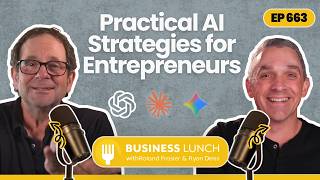
This episode explores the myth of hiring A players, the concept of micro CEOs, and how to structure teams for maximum agility and profitability in the AI era.

Listen instead and the audio keeps playing while you browse the site.
In this episode
The write up
The question that Ryan Deiss and I put on the table was this: is just hire an A player good advice? And if it is not, what should a growing company do instead? Ryan came in arguing that it was true and useless. I came in with a list of the liabilities that I have watched entrepreneurs walk into when they hire a big resume before the business can carry it.
Where we landed is that most of the smaller companies do not need what the world calls an A player. They need people who own a specific outcome that is measurable, which is what Ryan calls micro owners or micro CEOs, and those people should be paid based on the outcome. We agreed on the structure. We came at the compensation a little bit differently. I will walk you through both.
Why the A player advice does not help
Ryan's objection is that it is fortune cookie wisdom. He said it is like telling a sad, lonely single friend to just start dating drop dead gorgeous people who laugh at all your jokes. It is the right advice and unhelpful. The second part of his objection was that the label treats people as fixed, when an A player at one business is a D player in another, and it says nothing about their character.
Ryan also said that a truly valuable person is an accelerant. If your company is chaos, they are either going to accelerate the chaos or realize that this is not a place where they can do their best work and get out. He pointed out that you are usually the company's first A player, and very often it is you who is moving too fast before the infrastructure can support it, and you bring the company crumbling down. His recommendation is to think about building a company that does not need rock stars, because those are the ones that they are going to want to work for.
The liabilities nobody prices in
My contribution was that it is a luxury to hire an A player, and it also has some liabilities that you may or may not be thinking about. The first is whether you can afford them, because a lot of higher level people are going to ask for equity. The equity that you give them now might be the most expensive equity you ever give, because farther along the valuation would be higher and the cost to you would have been significantly lower.
The second is what comes with them. We had an absolutely A plus candidate interviewing at one of our portfolio companies. When we asked her what her first 90 days would look like, she said we need a lot more staff. I think she joined her prior company at 800 million, and it was a $3 billion company when she left. She had 600 people working for her. So she came in here with 200 and said it is horribly understaffed. She was very good at that. But the challenge is that she was operating inside a really well funded guardrail, where this is what you need to have: all these people and all this stuff. My view was that she is amazing, and everything that she costs is a times 20. She will fix all the things with lots of people and lots of tools. That is the same thing that happens when you get an A player in, say, the CFO position. They come in and they hire a controller and a head accountant and an FP&A person and assistants and all this other stuff. Now you have six or seven people in finance where you had one before, maybe a bookkeeper or a fractional CFO.
My third one is the culture clash, and I think this is the biggest surprise. They are very often management operators, not entrepreneurs. So they are thinking about repeatable processes. That is actually the right answer, unless you need the outcome just to survive long enough so that you can build the process. But it is not thinking about skipping this month's paycheck and putting money back into the company. It is thinking about what the contract says and what the resume is. I do not mean that in a bad way. It is just that it is not their company. As I said on the show, it is just different.
I gave two examples. One was that we were negotiating for five months with an operator, and when EBITDA came in a little bit lower than they thought it was, everything changed, including all the things that we had agreed to. The other was a highly profitable software company that had multiple seven figure EBITDA and brought in a CEO who had done multiple exits from an enterprise background. The business was SMB, and the enterprise solutions did not work there. Then they had this contract that everyone had fallen in love with, which had to be bought out at a significant price to the founders. I think those are valuable people. They are not a cure all.
What a micro CEO actually owns
Ryan's position was that in a small business, which is everything up to and through 50 million in revenue, you probably need a team of owners, lowercase O, as opposed to a level up executive. Ryan's example was to tell someone they own the outcome of generating 3,000 marketing qualified leads a month. That is not a title. You are not hiring a title. You are saying, this is the outcome that you are going to be responsible for, which isolates the roles into outcomes.
I pushed him on it, because I feel like if you are a micro owner and you are really just an employee with a new label, you have not really got much of an idea. His answer was that it is all employees, and the difference is what they manage to. A frontline employee manages to a task: did I do that or didn't I? A micro owner is managing to a metrics based outcome and figuring out how to assemble the work to hit the number. Above that, it is managing to strategic outcomes. What Ryan said was that the middle one is the one that most owners skip. They get overwhelmed by helpers. They hire a manager and all they have done is elevate the task. The manager's task is to manage the helpers now. That is a task. It has not taken anything off their plate.
The definition that I gave was that a micro CEO is a high leverage operator with full sovereignty over a distinct business unit, product line or customer acquisition funnel, measured on the capital efficiency and profitability of that pod rather than on tasks performed. To me, the autonomy is the thing. It can be within a band, but they have to be able to make decisions while you are acting as coach and advisor. If you do not let them, then they will behave like an employee.
On hiring, Ryan said he does not ask candidates to tell him their background. He just gives them the current number and the target and invites them to ask questions. He is listening for whether they know the series of activities that get us from one to the other. Ryan also said he asks ChatGPT, Gemini and Claude what the role should be called, because to him that is the least important part.
Where Ryan and I differed on compensation
I believe that if you are expecting someone to behave like an owner, then they need to have some sort of owner upside. Ryan agreed on the upside. He just drew the line at equity. I think his way is to ask what moving this metric is worth in dollars, and then what share of that upside we should pay them. Is it 10% or 5% or 1%? He talked about three tiers. The first is salary for task roles. The second is salary plus variable compensation for micro owners. The third is either a profit sharing pool or equity, phantom or otherwise, and only for people who are operating strategically across the company.
I laid out two other tools. One is pool participation, which is just a bonus on the increase in profit of the thing they are managing. The other is synthetic micro equity in just their unit. If they hold 5% of a division and you agree in advance on a conservative multiple of, say, 5x, then if they took out 100,000 in profit on that interest, they would effectively be holding 500,000 of synthetic equity in that one part of the business. It could vest on time, on milestones, such as when they grow this division's profit by 40% or more over three years, or on some combination of those two. And they are not riding the rest of the company up or being punished by it going down. You can then add language saying that they lose it if they leave. You can put in puts and calls so that you have the ability to buy them out, and potentially a non compete. Check your local law before you do that.
What this does to the middle of the org chart
The advantage I like most is the alignment. A manager is incentivized to have more labor. A micro CEO who is getting paid on the profitability of the pod is aligned with an owner who wants a flatter company. Ryan made the same point from the other side, saying that in most corporate structures, you are incentivized to get promoted by having more people under you. What he is trying to do is break that and go to player coaches. And player coaches can run some people and some AI employees.
Ryan also warned that big companies are laying off mid level people, and those resumes are going to look like A players to a small business, but they may be the opposite of what it needs. Some people are arguing that this is going to leave a dearth of leaders in three to five years. I do not think so. I think the people who are going to ascend are going to be the most adaptable and AI aware. And I hope that those middle managers end up liberated into their own ventures.
So before you write the big offer, pick the one number that matters. Then give one person real authority over that number, and tie their upside to that number alone.
Written from the recording of this episode of Business Lunch.
Show notes
In This Episode of Business Lunch: This episode explores the myth of hiring A players, the concept of micro CEOs, and how to structure teams for maximum agility and profitability in the AI era. Ryan Deiss and Roland Frasier discuss the pitfalls of traditional hiring and the advantages of outcome based roles.
Connect with me on social:
- TikTok: Check out my TikTok Here
- Instagram: Check out my Instagram Here
- Facebook: Check out my Facebook Here
- LinkedIn: Check out my LinkedIn Here
- Subscribe to my YouTube 👉 Here
Resources:
Free tools that go with this one
- 1RGR100 growth readiness scoreTen minutes on how fast the business can actually grow, and a one page 90 day sprint to move it. Exit Ready measures how sellable you are. This measures how fast you can grow.rgr100.lovable.app (opens in a new tab)
- 2Leverage ScorecardA three minute score on how much of your growth runs on other people's money, resources and time.getleveragescore.com (opens in a new tab)