Episodes / Enterprise Value / No. 615
The Lean Team Dilemma: AI, Efficiency & Business Value
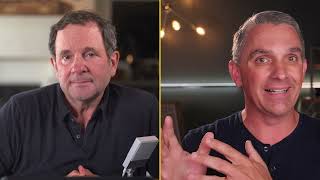
In this episode, Roland Frasier and Richard Lindner take a look at the current trend of running businesses with ultra lean teams, the role of AI in operational efficiency, and the real…

Listen instead and the audio keeps playing while you browse the site.
In this episode
The write up
The reason we talked about this is that Richard Lindner has been seeing lots of entrepreneurs on social media and in groups bragging that they're running their businesses with extraordinarily lean teams. He says, "it's a badge of honor to operate with as few people as possible." So he came into this conversation asking me for my opinion on whether that helps or hurts when somebody is looking at acquiring the company. We talk about the trade offs between having operational efficiency and profitability on one side versus building something that has transferable value on the other.
Where we landed is that it depends on what you're building. I think it really comes down to this: if you're building a lifestyle business and you're doing lean, it definitely hurts you on transferable value. If you're building to sell, a company that is overly lean isn't going to be as marketable as a company that has redundancies. In either case, I think the bragging is not really helping anybody.
Which of the three buckets are you in
My first answer to Richard was that this is really a question of which bucket you fall into. We had talked not long ago about what we decided to call the great flattening of businesses into one person departments, and that AI has enabled that, but the underlying question was there before then.
Bucket one is the lifestyle business. This is basically a one person show. There are no employees. The company will cap out at whatever it can do without having to hire people and all the hassles that go with that. In terms of transferable value, this is going to be really hard to sell because you're probably going to be considered an owner operator, and market multiples are significantly lower for owner operated businesses than for professionally managed ones. The difference between an owner operated business and a professionally managed business is that a professionally managed business can be bought as an investment. An owner operated business is bought as a job. There are more investors out there than there are people who want jobs.
Now let's take a look at bucket two. Bucket two is the company that gets pancaked down with technology to be as lean as possible. The revenue per employee on a business like this is going to speak well towards a high valuation. The risks there are replacement cost, dependencies on individuals for entire departments, and what happens when there's a tech interruption. Also, by the way, tech is getting more and more expensive as a budget item. It's almost becoming like a capital expenditure, except that it's not something I can turn around and sell, because it probably got obsolesced last week.
Now we're on bucket three. I think this is where you want to be: the right number of people, balanced with tech efficiency, but the human touch is still there and there are no giant dependencies.
Richard agreed and he sharpened it a little bit. His read on it was that if you're building a lifestyle business, then build a lifestyle business. Make it as profitable as possible. Make it as automated as possible. Make it as leveraged as possible. But if you are building to sell, you're selling the ability to execute, and technology breaks. His argument is that an employee can become obsolete over a period of years if they have no interest in professional development. An AI employee may become obsolete in a matter of weeks. He's seeing bragging on social media from businesses that are not lifestyle businesses, but are down to three and four human employees, and he's talking to people who are aspiring to get that lean with the hope of exiting in the next 18 to 24 months. His read is that this will be viewed as a massive devaluation.
Customer support is where lean goes wrong first
I went in my notes looking for a company. I couldn't remember the name of it, but I knew that they had done a $40 million a year savings by replacing most of their front end customer service people with AI, and then everything fell apart. They got terrible reviews and terrible customer experience, lost the customers and went back to having humans.
My view is that to be lean in customer support is usually to give poor customer support, whether it's AI based or offshored with contractors or just not there at all, like a lot of tech companies where you can't even get anybody on the phone. John Asaroff texted me that day and asked me if I knew anybody at Facebook, because they were having a big problem. I was like, I haven't talked to anybody there except the one time I was there. But I think the important thing is that customer service is a human to human department. If you try to be ultra lean on that, I think you're going to get in trouble. Ultimately, those people who were bragging about it had to recant, which is pretty embarrassing.
Richard pushed on the cost nobody models. You can rebuild a customer service department, he said, but how do you rebuild brand trust and brand loyalty? On AI in that seat, his line was "It's efficient, but it's not empathetic." You can train custom agents, he argued, but you cannot train judgment.
His practical advice was to model it out before making that kind of massive change. What is the amount of cost savings that you're expecting? What is the potential bad? Then double the bad and half the good over a three year period and see where you end up. Then look at the multiple you would be getting three years out from today and say, what did the change do to the value of the company? Richard thinks back of the napkin math is enough, and that this has moved beyond efficiency into trendiness.
When the buyer does not want your people anyway
There is a case where lean doesn't hurt you. This is like one of our friends, Tom, who does the forklift business. He loves it. He's happy with it. He's not trying to take it to giant. He doesn't brag about it. But he's probably going to be able to sell it and do really well because it fits into an acquirer that would probably fire all the employees anyway.
That's what happened with Traffic and Conversion Summit when we sold that. They didn't need us to do anything except maybe speak, and they didn't need any of the employees or contractors that were working there. They had a team, so they just basically dropped it into their company. So if you've identified that your potential acquirer probably doesn't want your people, then being lean is probably okay.
Richard's response was that even then, they're going to want to be sure that there are SOPs and an operating system. If you've got an operating system of prompts and scripts and all that kind of stuff in the background that isn't decoupled from the ability to have humans run the thing, then a buyer who's looking to have humans run it is going to want to be sure that they're not going to get stuck with that.
What the minimum team looks like
Richard asked me which roles are critical. Transferable value requires cross training and eliminating key dependencies, which could be a department of two instead of a department of one. If you're wearing all the hats, you're losing business. You're not seeing around the corners that a solid team helps you see around. I also think it's really important to say that I've been that person. I've been the person who didn't want any employees. I fancied myself good at different things and watched the expert come in and be so much better. A tiny company loses all of the different backgrounds and personalities, and somebody that's close enough to leadership to challenge a decision that doesn't make sense.
I think if you're doing 10 million a year or more, you're going to need a three person minimum in finance, which would be a true CFO, a controller and an FP&A person. Same thing for a true CMO, same thing for sales, and those people are going to need teams under them because otherwise they're not going to be a good investment. So maybe you've got one human touch person and one tech person under each of those arms, and each of those has a backup. The tech person is dedicated to that department, as opposed to a CTO who's responsible for all of it. The CTO will be overwhelmed and not have the departmental knowledge to do the job. That would get you to 20, 30 people.
Richard's point on the person in the department who's responsible for tech was that if you're a generalist and you're trying to build AI to replace something that you don't understand, then you're kind of hiring a really bad employee, except you built this one, so that's on you.
If you are under 10 million
Richard then spoke to anyone who heard 20 people and a lot of C titles and panicked. His advice was to drop the C level and think in roles. Somebody has to own finance, even if it's a bookkeeper plus a fractional CFO type service. A human has to own marketing. Someone has to be responsible for sales. Someone has to be over delivery. He noted that Digital Marketer, where he took the training and used it to train AI agents for marketing teams, will not work with a company that does not have at least a marketer, because there would be nobody to run them.
Richard says this is where the biggest opportunity is. He calls it the messy middle. It's the companies that are too big to be small and too small to be big. AI lets one person do the work of 10, and then you can use the profits from that to turn one into three who can do what used to take 30. I agree, that's the big thing.
My own close would be this: don't feel like you have to have a hyper lean company, and don't get so wrapped up in bragging about it that you end up cheating yourself out of future earnings, growth, or the ability to sell.
Written from the recording of this episode of Business Lunch.
Show notes
Welcome to a new episode of Business Lunch! In this episode, Roland Frasier and Richard Lindner take a look at the current trend of running businesses with ultra lean teams, the role of AI in operational efficiency, and the real impact these choices have on business value and potential for acquisition. Whether you’re a founder, operator, or executive looking to optimize your team, scale profitably, or prepare your business for sale, this episode is packed with insights on balancing technology, human capital, and long term growth.
Highlights:
"It’s a badge of honor to operate with as few people as possible."
"If you’re a lifestyle business, build a lifestyle business. If you’re building to sell, you’re selling the ability to execute."
"Trying to be lean in customer support is usually to give poor customer support."
"Small businesses that are overly lean are just not going to be as marketable as companies that have redundancies."
CONNECT
• Ask Roland a question HERE.
RESOURCES:
• 7 Steps to Scalable workbook
• Get my book, Zero Down, FREE
To learn more about Roland Frasier 👉 https://msha.ke/rolandfrasier/
Connect with me on social:
Free tools that go with this one
- 1Exit Gap valuationA free market valuation in about two minutes, and the three levers that move the number.getexitgap.com (opens in a new tab)
- 2Scale & Exit AssessmentAbout five minutes. A score out of 100, what your business is worth today and after the fixes, and the 11 value killers capping the number, in a 15 page report.score.scalable.co (opens in a new tab)