Episodes / Owner Mindset / No. 644
The Right Time to Hire a CEO: Secrets from Top Entrepreneurs
Roland Frasier and Ryan Deiss explore the critical aspects of CEO succession, when to hire outside leadership, and how founders can maintain control and passion for their business as it…
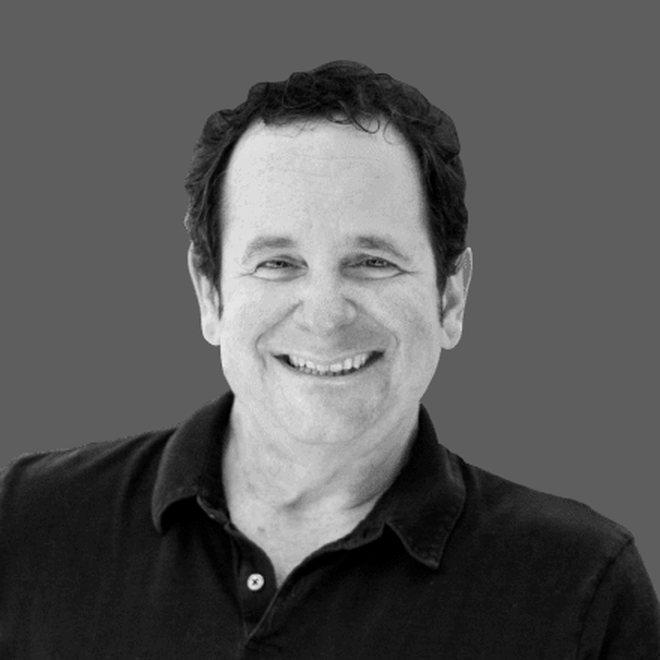
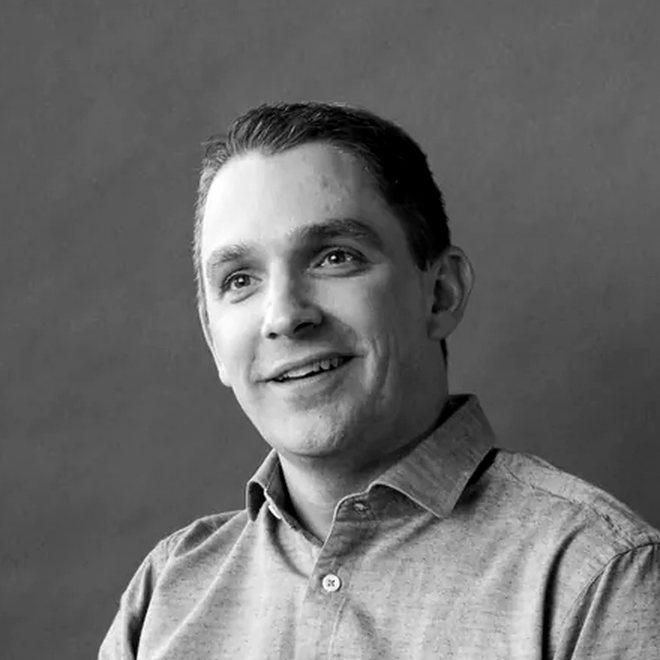
In this episode
The write up
The question that Ryan Deiss and I put on the table is one that we hear from founders pretty frequently at Scalable and on our founders board: I'm the CEO, is it time to get a professional in to run things? I say no to that pretty regularly, and it turns out Ryan does too. Where we landed was that you want to be the founder CEO for a pretty good while. You want to be there longer than you probably think you should. And the urge to replace yourself, as Ryan put it, is not so much a problem with the role as it is a problem with the job that you have handed to yourself.
We didn't agree on everything. A good part of our conversation was about the order of the hires you make instead of a replacement CEO, and that's where I think the useful disagreement came in.
Why the question usually comes from burnout
Here's something that is kind of interesting. It started out as an article about the CEO of McDonald's posting a video of himself taking one tiny bite of the new Big Arch burger, and everybody took it as an indication that he hates the food. I thought, I bet Ray Kroc ate plenty of McDonald's burgers. That caused me to think about how this relates to founder CEOs versus non founder CEOs.
My thinking going in was that it's usually in the neighborhood of 200 million that you really want to think about doing that transition. Then I did a little bit of research and found that there is some support for the idea that one of the biggest mistakes founder CEOs make is to bring in a professional CEO right before an IPO or anywhere before that $200 million mark, like at 20, 30, 50 million. My reasoning for that was that there's never going to be somebody who has the passion that you have, and there are plenty of positions underneath the CEO that can do the technical work of scaling.
Ryan's read on this was that the founders who are asking this are super burned out and they're looking for permission. He said he's seen that not work out many dozens of times, and he couldn't think off the top of his head of a time that it worked. Then he told his own story. He said, remember in 2011 when I was tired and I said that I didn't have what it took to run the company and I hired this professional CEO who ran it into the ground? He said, I mean, we lost millions of dollars, our best people were fired or ran off. And I came to you and I said, would you buy into a company that we're not even sure how we're going to make payroll next week? And he said that's part of why we're business partners today.
What I remember about that hire is the pitch. The vision was, we're going to scale by duplicating into multiple locations. It was a good selling point, but the company was still wrestling with what it wanted to be and it was already on the internet. It wasn't really a locational kind of business.
What a professional CEO can and cannot do
There was a line that I drew there between two types of CEO. One is the founder type, who asks: What should this company be? Does it even make sense to do this? How are we going to take that giant risk? The other is the operator, who asks: What can we improve? How can we professionalize this thing? I think when you're past product market fit but you haven't actually settled on what you're going to do, operators are usually not good at that. It goes back to what I said in the episode as well, which was that it's hard to professionalize your way to profit.
My examples were Tim Cook at Apple after Steve Jobs, Satya Nadella at Microsoft, and Amazon since Bezos left. I think they're all great operators, and those are some of the most valuable companies on the planet. But I don't see anything coming out of them that is entrepreneurially groundbreaking. Then you look at Elon Musk and say, Tesla, satellite internet and now robots. I said that can be terribly dangerous, because you can just diversify yourself into bankruptcy.
Ryan Deiss put some of the blame on the people who popularized the visionary and integrator idea from the book Traction and EOS, which is the pitch that you only have to be the visionary and you can hire somebody else to run the business. His argument was that a professional CEO by definition is not an entrepreneur, and at best they're optimizing what's already there. He also pushed back on my examples. He said those are giant public companies that had been around for decades. Ryan's point was that if you're a founder in a $2 million, $10 million or maybe even a 20, 30, 40 million dollar company, that's probably not the time. And if you really want to step away from it, sell it. My response was, when you hit a trillion, then you can step away.
The three things a founder holds on to
I offered three things that a founder CEO should hang on to even after they bring professional people in:
- Setting the vision for the company
- Deciding where the company places its bets
- Owning the narrative, because the founder's story is so powerful
Most of the rest can go to people who have seen the growth that you want to see and who know what the systems are. They're much more caretaker oriented than builder oriented. They're thinking, how do I reduce risk? How do I not bring more of it in?
Ryan agreed with all three of those. He said he thinks the highest leveraged thing that you can do as a founder is be the spokesperson for the company: Richard Branson and Sarah Blakely and Warren Buffett and those guys. He said that when a founder comes to him and says, we need an outside CEO, he asks, okay, well, what are you doing right now? And the list is not anything to do with the CEO job.
That's exactly what I see too. The founders who tell me they're overwhelmed are just trying to brute force their way into wearing every hat in the company, and they think that one person is going to come in and fix all of it. In thousands of deals that I've done as an attorney, quasi investment banker and investor, I have never seen a CEO brought in to replace the founder be successful when that was the issue. Ryan's version of it is: good people don't fix broken systems. Broken systems break good people.
Where we disagreed: the order of the hires
Ryan's sequence starts with a vacation. Pick a date six months out, declare it, and use it as a forcing function to get everybody to document what has to run in your absence. Get the operating system out of your head. Hire a functional leader for your biggest constraint. Then repeat that across the core functions, and only then add a COO.
I like the vacation as a forcing function. The question that I would ask is, what would have to be true for you to be able to do that? My order would probably be different. I would go with finances first, because my experience is that even companies up in the nine figures often don't have any clue what's going on financially. I think that would probably mean having a controller, not a CFO. And if you can't afford full time, then a fractional accountant, not a fractional CFO, because I think a true CFO will want a controller and an FP&A person, and then pretty quickly you've got six to eight people in finance.
Ask me how I know. One of our own businesses was in the top 500 companies for growth on the Inc list, and some of the partners believed that we were making money. I had put a hundred grand from my personal bank account in to patch payroll. We didn't know, because our financial reporting was poor. Then there was the company that was in the hole about $12 million of work it had sold and still had to perform. We worked that out over about 14 months with day by day reporting. You could not do that without really good numbers.
After finance, I would say it's going to be whoever your operator is: somebody who has actually seen where you want this company to go and was directly responsible for getting there. That's probably my preference. The thing to do here would be to write the job description and qualifications and then get a universe of at least five people who meet those.
We agreed on the finance first thing. Where Ryan held his ground was that we need a couple of the functional leaders in before the operator, because in his experience they pay for themselves so much faster. He told a story about a founders board client who had hired a VP of operations so he could focus on sales and marketing. But 12 months later, the payroll was up and sales were not. My reaction was that the story supports my point, because an operator who's got the right experience would have put the right sales leader in place. I don't know that either of us is right. There's never, to me, advice that always works.
What to do with it
Stay in the seat. Hold on to the vision, the bets and the narrative, because no one will care about this company as much as you. Create space to see how it operates without you. Get someone on the financial side first so that you know whether you're making money and what's going to have to be true for you to make it. Put in an operating system, ours or somebody else's.
The way Ryan closed it was, you don't hate your business. You hate your job. His answer to that was to fire yourself from the job that you've got and rehire yourself for a better one. If you do those things, you'll probably find out that you actually like being the CEO of your company.
Written from the recording of this episode of Business Lunch.
Show notes
In This Episode of Business Lunch: Roland Frasier and Ryan Deiss explore the critical aspects of CEO succession, when to hire outside leadership, and how founders can maintain control and passion for their business as it scales. They share practical insights, real world examples, and strategies to help entrepreneurs navigate growth without losing their vision.
Connect with me on social:
- TikTok: Check out my TikTok Here
- Instagram: Check out my Instagram Here
- Facebook: Check out my Facebook Here
- LinkedIn: Check out my LinkedIn Here
- Subscribe to my YouTube 👉 Here
Resources:
Free tools that go with this one
- 1RGR100 growth readiness scoreTen minutes on how fast the business can actually grow, and a one page 90 day sprint to move it. Exit Ready measures how sellable you are. This measures how fast you can grow.rgr100.lovable.app (opens in a new tab)
- 2Leverage ScorecardA three minute score on how much of your growth runs on other people's money, resources and time.getleveragescore.com (opens in a new tab)