Episodes / Leverage First Growth / No. 648
The Future of Business: Single Person Companies vs Giants
We explore the dynamics of single person companies versus scaled organizations, the impact of AI on workforce and productivity, and strategic decisions for business growth in a rapidly…
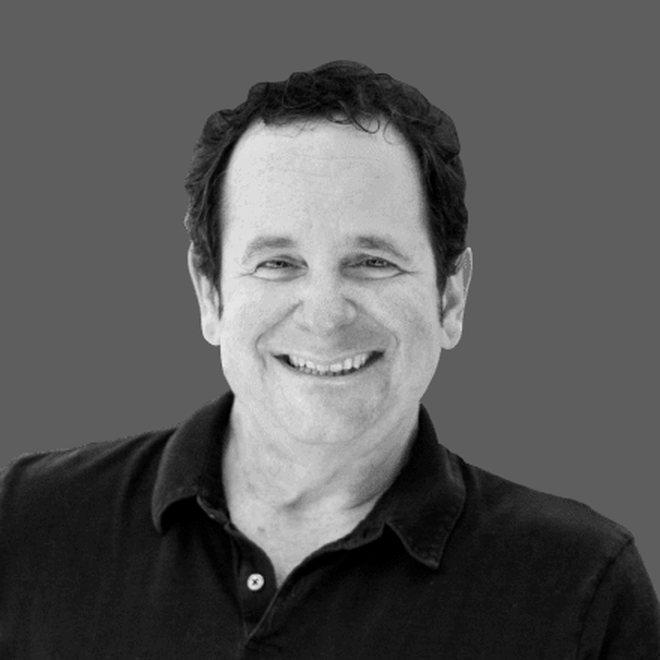
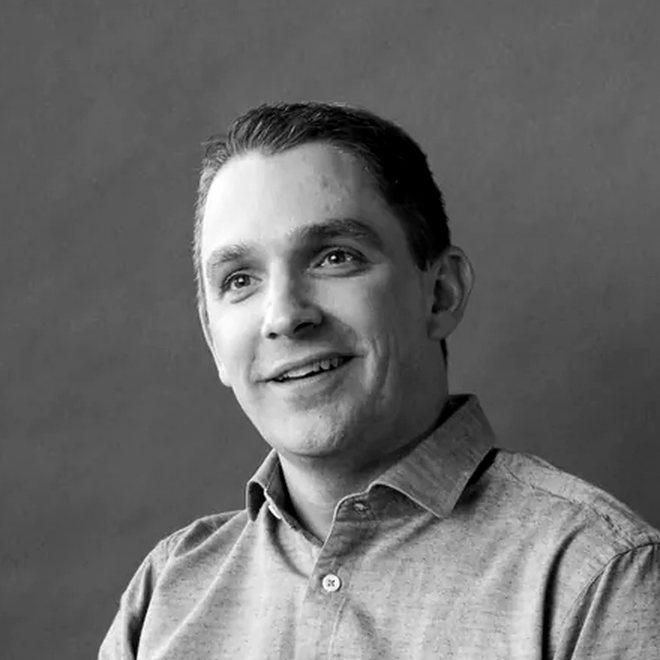
In this episode
The write up
Ryan Deiss and I got together and sat down to work through a question that is all over the headlines right now: is the future a single person company, or the lean architect, or is it going to be a scaled organization where there are a lot more people? I brought the headlines and he brought what he's done inside his own companies. We landed ultimately on the idea that headcount is the wrong thing to be after. As Ryan said, it's really just revenue and profitability that you want. And what you need is great people, whether it's one or 1,000.
That's where we ended up. Then we went into the more difficult questions. What do you do with the people who won't adopt these new things? What do you do with the good people who have been automated out of a job? And should a founder be chasing the latest, greatest AI tool? I think both of us said no to that.
The question on the table
I opened with the fact that there are a lot of things going on out there. Elon Musk said he's betting that the first trillion dollar single person company has already been born and we just don't know who it is yet. 19 single person companies showed up on the Inc. lists in the most recent round. And Oracle laid off 30,000 people with a cold email at 6 AM.
Then Ryan asked what the frame was. Was it start a single person company, or should you try to become one? I said I think more people will resonate with the second thing. So I have a company, and what do I do? If I can cut my labor expenses by 75%, do I do that? And if not, why not? It's funny, because we just went through having to hire a bunch of people in one of our businesses to help with fulfillment. So it's not like this is theory that we're talking about.
Ryan started with the layoffs. The way he read the numbers on the Block layoff that Jack Dorsey announced was that all it did was get them down to roughly the same headcount as everybody else their size in terms of revenue. His theory is that the politically correct thing to say is AI. The thing that helps margins is a reduction in headcount. So it's, let's do both. And most of these companies are just shedding dead weight.
Leverage, not a smaller payroll
Ryan told me what he did when it was clear that AI was a thing. They went to implement it everywhere that they could, and the people that were cut first were the people that refused to use it, a lot of them on the marketing side. Now they're looking to hire more, because the people they have are more efficient and the business is growing. His take on it is that productivity goes up when you combine your humans with the technology or automation. It's almost never the technology alone.
This is tied to something that we were talking about at our Get Scalable Live event a few months ago, four or five months ago now, and it was the single metric to rule them all. It was RPE, which is revenue per employee. Your accountant might not perform at the level that your star salesperson does, but it's still a great metric, and there are benchmarks you can look at in terms of other companies in your industry. So if you can get an edge there, you'll be getting an efficiency edge.
Then I brought up an argument that Gary V made. Say that he's got 400 employees and you cut your work force by 75%, so you've got 100. Same pay, same services, you're significantly more profitable. You can pocket that profit. You can reinvest it in your business, or you can lower your fees and steal business. My addition was that if you lower your fees, that's a race to the bottom. Perfect competition is a terrible place to be. So you should probably rule that one out. And then he said, but if I took the time to get my 400 people up to speed, I'm probably four times more capable than you are and I can out compete you that way.
I think what Ryan was saying is that Gary V is exactly right, because he's approaching it the way an entrepreneur would. The people that are being heard on this are not entrepreneurs. They're journalists. They're academics. They're bankers. They're people that are selling AI software, but not operators. An operator that hears that there's a tool that makes people twice as productive doesn't say, Well, how do I get from 400 to 200? They say, how do I get my 400 people to do the work of 800? That's leverage, Ryan said.
Why Ryan got leaner before he rolled anything out
Ryan added a wrinkle to that. The gains don't happen immediately and they don't happen evenly. So there are times where it is good to get smaller and then scale back up. He said, Yeah, we had to do that. We were bloated. And I know we would have had pushback and change management issues from our lowest performers anyway, because the rollout itself would have exposed them. So Ryan asked, who am I most worried about pushing back? And then, is it a legitimate concern I want to talk through, or is it just the under performer that I need to let go anyway, whether AI existed or not? They let those people go. They did not blame AI. And he said it was way easier to roll out once we were leaner.
That I thought was really good. What I liked in how he said it was that they weren't performing at the level that was needed by the company, because it's always moving. When a typewriter comes along, and then a computer comes along, and then AI comes along, and all of that makes everything potentially more productive, standing still is underperforming. I thought it was really great. To me it's just irresponsible as an owner to have someone who's not willing to up level and evolve. So I liked both of those things. Then Ryan added that it's also mean to them, because you're allowing them to stay in that place where they can't be the best version of themselves.
I do think you've got to give them the ability to embrace it, but also support them in that transition. That's the smart thing to do, because good people are hard to find. But if they ain't gonna do it, they shouldn't be there, which is what I said on the show. Ryan, I think, drew the line in the sand: this is somebody who's nervous about it, but wants to do it and will. This is somebody that's just flat out saying, no way, I ain't doing it. He had some people that were scared of looking foolish, and he got them extra help and they took off.
Ryan's math on this was that AI is a multiplier. So a four out of 10 doubled is an eight. A nine out of 10 doubled is an 18. And I said, but if we go back to the old order, the new eight is still a four. They are who they are. His answer was that it's only widening the gap as you add more and more multipliers.
When the role itself goes away
I asked Ryan about the harder case: the person who is an eight or a nine and whose job has been automated out. In our accounting company, the people doing data entry, moving information from forms based tax information into the computer, are gone, because we don't need them anymore. I'm also seeing in SDRs and customer service that those are shrinking dramatically. I don't see that as a greedy move. The person that's calling the auto shop saying, hey, I need an appointment, is being served immediately by an AI agent any time they call, and the person that is calling and saying, where's my tax return sitting, gets an immediate answer.
Ryan said he's not seeing whole roles go away so much. The departments are more flattened and there's a layer of management that goes away. Then for those that are staying, he sees two paths.
- Oversight of the AI. I added that this person needs the job specific background, because otherwise it is garbage in, garbage out. Ryan compared it to the automated lines in Detroit, where the people who had run the lines were the ones monitoring the machines.
- Moving up. Ryan said they created a full stack sales position where every salesperson starts as an SDR, largely as training. I said it is a filter too.
Ryan also said some people aren't going to land in either of those places. His thinking is that owners should not make decisions based on the fear of job loss, because nobody really knows what the world is going to look like in 2030. The most in demand job in the world has not been invented yet, is how Ryan put it. Then I mentioned that people are paying other people to walk with them now. So there's a place for non technical.
Stay off the bleeding edge
I see so many people in threads and masterminds that are desperately glomming on to the latest thing in AI, and then two weeks to two months later it's been taken over by something else. Claude Code completely rearranged my son Ryan's files on its own. But I feel like if you are a founder buying a Mac mini to set up OpenClaw on a clean sandbox, you are absolutely misfocused.
Ryan agreed. He went on to say that when he did a webinar with Richard on what they do every day, people were like, this is so basic. And he was like, Well, it works. They get more productivity out of it. His view is that founders who are just chasing the cutting edge are often distracting themselves from something that's fundamentally broken in the business and that AI is not going to fix.
So here is what I would do with all of that, and I think it's a very logical way to go about it. Measure revenue per employee against your industry, get your best people fully up to speed before you start counting the savings, support the ones that are willing to do that, part ways with the ones that aren't, and then use what works today.
Written from the recording of this episode of Business Lunch.
Show notes
In This Episode of Business Lunch: We explore the dynamics of single person companies versus scaled organizations, the impact of AI on workforce and productivity, and strategic decisions for business growth in a rapidly evolving technological landscape.
Connect with me on social:
- TikTok: Check out my TikTok Here
- Instagram: Check out my Instagram Here
- Facebook: Check out my Facebook Here
- LinkedIn: Check out my LinkedIn Here
- Subscribe to my YouTube 👉 Here
Resources:
Free tools that go with this one
- 1RGR100 growth readiness scoreTen minutes on how fast the business can actually grow, and a one page 90 day sprint to move it. Exit Ready measures how sellable you are. This measures how fast you can grow.rgr100.lovable.app (opens in a new tab)
- 2Leverage ScorecardA three minute score on how much of your growth runs on other people's money, resources and time.getleveragescore.com (opens in a new tab)