Episodes / Enterprise Value / No. 620
The Subscription Trap: Why Recurring Revenue Isn’t Always King.
In this episode of the Business Lunch podcast, Host Roland Frasier and guest Richard Lindner break down the subscription trap and why recurring revenue isn’t always the ultimate solution…

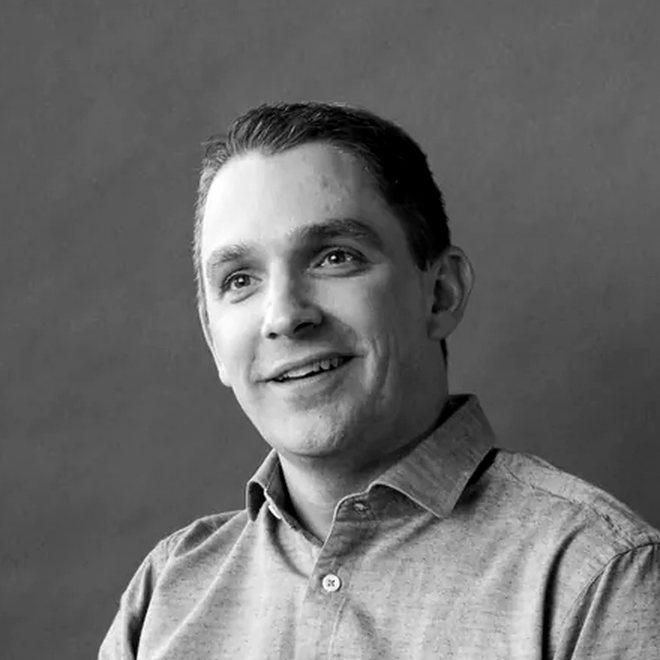
With guest Richard Lindner
Listen instead and the audio keeps playing while you browse the site.
In this episode
The write up
This is something that I have been saying for more than a decade now. Recurring revenue can be wonderful for your business. It can increase the value of the business. It can provide you with income that comes every month, so it starts you out on the books already with that income. And it can help to smooth out the rough spots. But said that way, it sounds like a panacea, and the logical conclusion is that everybody should go 100% recurring. So I brought Richard Lindner on to test that conclusion with me, because he has been in businesses where subscription did some good things and some bad things as well.
Where we landed, and I think this is something that's important for everybody to think about, is that for most businesses, converting the core model to a subscription model is the risky move. Bolting a subscription on to what you've already got that sells is the better one. Richard did most of the talking in this one, and he earned it. My job was mostly just asking questions that an owner would ask.
The month after the celebration
Richard started by separating two questions that people are conflating in their heads. Is it right for you to be in the subscription business? And should 100% of your business be subscription based? His read is that the market over indexed on subscription about seven years ago, and then it became a bad word about four years ago, when consumers got tired of forgotten charges. It has swung back because now we're in a world where people want to pay for things in smaller pieces over time.
Then he told the story that framed the conversation. A portfolio company that he operates hit 10,000 paid subscribers very, very quickly, and there was a big celebration. The month after wasn't quite as happy because, as Richard described it, just keeping up with churn at that size took more than their average acquisition of new subscribers.
So I asked him to define churn so we're all on the same page, and he breaks it into two kinds. Voluntary is the customer decides to cancel. Involuntary is what he called the hidden killer. Cards expire and cards get declined, and your billing system may have hard coded rules that say to try this number of times and then give up and cancel the subscription. No one has to decide anything. It just goes away. Then he gives questions for an owner. Can your system update cards automatically? Does it alert you before a card expires? Do you have outreach campaigns, even people on the phone?
He also talked about a line between what he calls a breakage model and a consumption model. His example of breakage would be Netflix. You do not audit how many shows you watched. What you're really looking for is that you're not going to be without Netflix on the day that you are bored. The gym membership tends more toward consumption, because if you don't go enough times, then you feel kind of foolish, and so you cancel.
Richard's point was that early growth hides all of this. You launch to your email list, you add paid and referral channels, and it compounds. Then you hit the ceiling of your addressable market and your channels. As Richard put it, "When you're losing more members than you know how to gain, that's when the subscription model goes bad."
What it costs to keep a subscriber
It was Richard who added another one to the list before we started at all: the innovation requirement. He said that if you look at what Netflix does, the content budget has been growing because more and more people have gone into streaming and they're acquiring rights and buying them up. In education, he said, a subscription means that every month there's new education. And if you miss a month, then the churn is going to go up.
That led into cost to service, and this is what Richard has seen across the portfolio. What he's found is that the lower the price of the subscription, the more support requests you get per member. You have less money per member coming in, and they're asking for more help. So if you've got 10,000 members, and you've got one and a half support requests per month per member, then that ratio gets skewed fast.
I asked him whether AI could make that math work. He said yes, front line support is a real advantage there right now. Chatbots are so much more interactive and prescriptive than the old routed choice menu systems. But then he went down the list: hosting and bandwidth and recordings and onboarding and editors. His point was that a digital subscription sounds really good until you add up the total cost.
So I pushed on it and asked whether you are better off selling toothpaste, which people use up every day, than content that you've got to keep creating. His answer was that a new toothpaste would be great if you could get out of the commodity market. This can still work for content subscriptions if it's attached to something that doesn't need to be created on a constant basis. For him, he said, it's core flagship content plus active community, because the community creates all of the new stuff itself. And what the member is actually paying for, what they would lose if they canceled, is really access.
Bolt on or convert
I brought up a member from our last founders board meeting who has an underground storage business. The idea being discussed there was a monitoring service, which would be a subscription and show you a picture of what's going on in the tank. I wanted to ask him whether owners should be hunting for something like that.
Richard liked it for a particular reason, which was that it wasn't an attempt to turn the core model into a subscription. It was a bolt on that is going to add value after the sale. The trouble, in his telling of it, comes when you fall in love with the model and you decide you don't want to sell this way anymore and you don't want to price this way anymore, even though that's the way that already works. There are things that make sense to pay for monthly and there are things that don't, and when you try to do that with something that doesn't, it just makes the customer feel stupid to pay that way. His line was that we need to define our business by who we serve and not by the pricing model.
If you do convert, Richard said, you want to treat this as a migration and project the cash. The month that you do the switch, assuming that the number of sales has been exactly the same, you have dramatically less in the bank. So he said to model the optimistic case. What if it's a 500% increase in conversion, and then down to something like a 2.5% increase, and then look at the cash implications of each of those. He also laid out what the churn pattern is and how month to month works. It's the highest churn after the first billing, the second highest in month two, the third highest in month three, and then by four, it normalizes. If you put that in a churn waterfall, he said, you're usually committing to about seven to nine months before you get back to the cash that you had.
The bolt on avoids that. It's not touching front end conversion, definitely not touching front end cash, and then the subscription builds on the back. I asked him which one he has been happier with, and we ended up in the same place. Unless you own something like a cell phone company or a streaming service or, as Richard added, software, you're probably better off keeping the model you have and then figuring out how to add value with subscription.
What to watch once you build it
From there we went to finding the bolt on. Richard is a big fan of chatbots. He likes just talking to the people who are already buying and finding out where they are getting stuck. He gave an example with a garage door company that installs a door and never comes back. He said that if there was a maintenance program, he'd happily pay something like $75 a quarter, or 25, 50 bucks a month for it, versus paying to get another one, which I think he said he ballparked at $15,000.
Then I asked him what the biggest pitfall is. For the conversion, he said, it is cash flow. For the bolt on, he would isolate that as a cohort, stay in the MVP long enough, and then check this short list:
- Does it make sense on paper?
- Does delivery match the model?
- Will customers buy it?
- Does it hurt front end conversion or referrals?
On the first one he gave us a benchmark. Best in class cost of service for a subscription company is 15 to 25%, which is 75 to 85% gross margin, and at anything near 50% or more you're losing money. On the last one, his example was the installer who used to get two referrals per door and now gets none because the pitch annoyed people in exchange for 20 bucks a month. That math doesn't work.
Predictable revenue without a subscription
Richard's closing thought was that he loves accounts receivable as much as he does subscription. If you can get one sale to pay you over the next three to six months through a payment plan, and then you make a consistent number of sales, it's built the same way. It's just less impactful on front end conversion. And he pointed out that the financing companies are out there that will do that for you. They'll pay you almost the full amount and carry the terms for your customer.
This is my own close. It's not all roses and unicorns, but there is a lot of really good stuff in these systems, and you should think about them as something that you want to look at for your business. You just don't want to start from the model. You want to start from what your customers need after the sale.
Written from the recording of this episode of Business Lunch.
Show notes
In this episode of the Business Lunch podcast, Host Roland Frasier and guest Richard Lindner break down the subscription trap and why recurring revenue isn’t always the ultimate solution it’s made out to be.
From the outside, subscription models look like a dream: predictable cash flow, higher valuations, and a business that doesn’t start at zero each month. But as Roland and Richard reveal, the reality can be far more complicated.
They dive into real stories from their portfolio companies, showing how recurring revenue can backfire through hidden churn, customer support debt, and endless innovation demands. You’ll hear how even big players like Netflix constantly battle to keep customers engaged, and why smaller businesses often underestimate the true cost of service.
This episode is a must listen if you’re considering shifting to a subscription model, or if you’ve already launched one and want to make sure it’s sustainable.
HIGHLIGHTS
“Recurring revenue is great… until you’re losing more members each month than you know how to gain.”
“There’s voluntary churn, where people cancel. But the killer is involuntary churn, declined payments, expired cards, that can quietly eat your business alive.”
“If you’re creating content subscriptions, pair them with community. Access is the real value that keeps people sticking around.”
“Don’t fall in love with the model. Define your business by who you serve, not just how you charge.”
Mentioned in this Episode
The difference between breakage vs. consumption models (think Netflix vs. gym memberships)
Why AI in customer support is changing the economics of subscription businesses
How to tell if your business should pursue a bolt on subscription or avoid it altogether
🎧 Whether you’re launching your first subscription offer or scaling an existing one, this episode will help you see beyond the hype and make smarter decisions for long term growth.
CONNECT
• Ask Roland a question HERE.
RESOURCES:
• 7 Steps to Scalable workbook
• Get my book, Zero Down, FREE
To learn more about Roland Frasier 👉 https://msha.ke/rolandfrasier/
Connect with me on social:
🎵 TikTok: https://www.tiktok.com/@rolandfrasier
📸 Instagram: https://www.instagram.com/rolandfrasier/
📱 Facebook: https://www.facebook.com/RolandFrasierPage/
💼 LinkedIn: https://www.linkedin.com/in/rolandfrasier/
Subscribe to Roland Frasier 👉 https://www.youtube.com/channel/UCkHnnFgdaTCg8KBd7W_LGSw?sub_confirmation=1
Mentioned in this episode:
Join Roland & Ryan at Get Scalable Live
If you’re a founder, CEO, or operator running a 7 or 8 figure business, Get Scalable Live was built for you.
This is not your typical business event. It’s 3 days of hands on strategy, real world frameworks, and next level networking with the smartest operators in the game.
Event Link: https://business-lunch.captivate.fm/gsl
🗓 November 18 to 20, 2025
📍 San Diego, CA
🎉 Hosted by Ryan Deiss, Roland Frasier, and Richard Lindner
🎧 As a Business Lunch listener, you get 25% off your ticket.
Use code LUNCH at checkout.
Get Scalable Live